
Piracy or Abundance?
AI promises an extraordinary age of abundant knowledge. But whose knowledge is it?
I use LLMs to learn almost every day.
I am currently completing a postgraduate qualification in Clinical Nutrition. I am pretty comfortable with the foundations of physiology after spending years working alongside AIBODY's brilliant scientists, and some of that knowledge inevitably rubs off. Biochemistry is a different story, I struggled with it a lot.
Without ChatGPT acting as an endlessly patient personal tutor, I am genuinely not sure I would have taken this on.
I can ask the stupid question without embarrassment. I can ask it five different ways. I can tell it exactly which part I don't understand. I can ask for a simpler explanation, then a more technical one, then a worked example. I can move between physiology, chemistry and clinical application in seconds.
That is extraordinary.
Scale that experience across millions of learners and it is difficult not to be optimistic about what AI can do for access to education.
There is, however, a problem.
The world's most patient tutor sometimes makes things up
LLMs hallucinate.
We somehow manage to underestimate and overestimate this problem at the same time.
In my experience, technology vendors sometimes underplay it when talking to faculty. Faculty, understandably cautious about introducing generative AI into healthcare education, can sometimes talk about hallucination as if useful deployment were therefore impossible.
The reality sits somewhere in between.
Modern models can be remarkably accurate, and their educational usefulness is already obvious. But hallucination remains a real problem in healthcare. More importantly, an LLM does not normally announce that it is hallucinating. It can present something false with exactly the same fluency and confidence as something true. Reviews of healthcare LLMs continue to identify confident factual errors as an important limitation. PubMed
We have increasingly good ways of reducing this.
One of the most important is retrieval-augmented generation, or RAG. Rather than asking an LLM to rely solely on whatever statistical representation of knowledge exists inside the model, we give it trusted external information relevant to the question and ask it to reason from that.
And it works.
Healthcare studies have shown substantial reductions in hallucination when models are grounded in curated information. In one study of patient information, hallucinations fell from 38% with native ChatGPT to 10% with a RAG system. Another controlled radiology study reduced hallucinations from 8% to zero in its test set. That does not mean RAG magically guarantees truth, but the direction is clear. JMIR
So the answer to unreliable AI is pretty straightforward right? We just ground it in information we trust.
Except that creates another problem.
Who owns the truth we are grounding it in?
Suppose I buy Robert G. Carroll's Elsevier's Integrated Physiology.
I paid for the book. It is sitting on my desk. Surely I can do whatever I want with it?
Not quite.
Under U.S. copyright law, ownership of a physical copy and ownership of the copyright are explicitly different things. Buying the book gives me ownership of that particular copy. It does not transfer Elsevier's or the author's rights to reproduce or adapt the copyrighted work. U.S. Copyright Office
Now imagine I scan the entire book, upload it to an AI system and say:
"This is my physiology tutor. Answer all my questions using this textbook. Generate explanations, quizzes, flashcards and personalized tutorials for me."
Is that infringement?
Here is where things become somewhat uncomfortable because the answer is
“maybe, maybe not”.
Fair use in the United States can protect some unlicensed use for teaching, scholarship and research. Courts consider the purpose, the nature and amount of the material used, and the effect on the market for the original. An individual privately using a lawfully purchased book as a study aid is therefore not the same legal proposition as a company copying thousands of books to build a commercial product. There is no simple rule that every personal AI upload is unlawful. U.S. Copyright Office
But there is equally no principle saying:
I paid for access, therefore I can feed the entire work into any AI system I choose.
That distinction becomes much more important when we move from one student to an institution or a software vendor.
A subscription is not ownership
Imagine a university has subscriptions giving its faculty and students access to thousands of textbooks and journal articles.
Could the university take that entire library, put it into a RAG system and build its own AI tutor?
Could an AI company tell a university:
"Connect all the publisher content you already subscribe to and we'll turn it into AI lessons, cases, assessments and study tools."
The answer is most certainly not an automatic yes. The rights depend on the licences governing that content.
And publishers are beginning to make their position very clear.
Elsevier currently says that its legal agreements do not permit Elsevier content to be processed through public AI tools unless expressly allowed by the relevant terms, subscription agreement or other authorization. It separately provides licensed text and data mining access for certain non-commercial research purposes. Cengage's current higher-education terms expressly prohibit using its content to text or data mine or develop or train applications and models such as ChatGPT. Springer Nature similarly says that institutional text and data mining rights are controlled by the specific licence agreed with the institution. Elsevier Support
In other words access to information is not necessarily permission to repurpose that information for AI.
And suddenly the apparently simple solution to hallucination becomes tangled with copyright, contractual rights, data provenance and licensing.
We want our AI systems grounded in the best possible information.
The best possible information is sometimes proprietary.
And the fact that we can technically give it to the AI does not necessarily mean we have the right to do so.
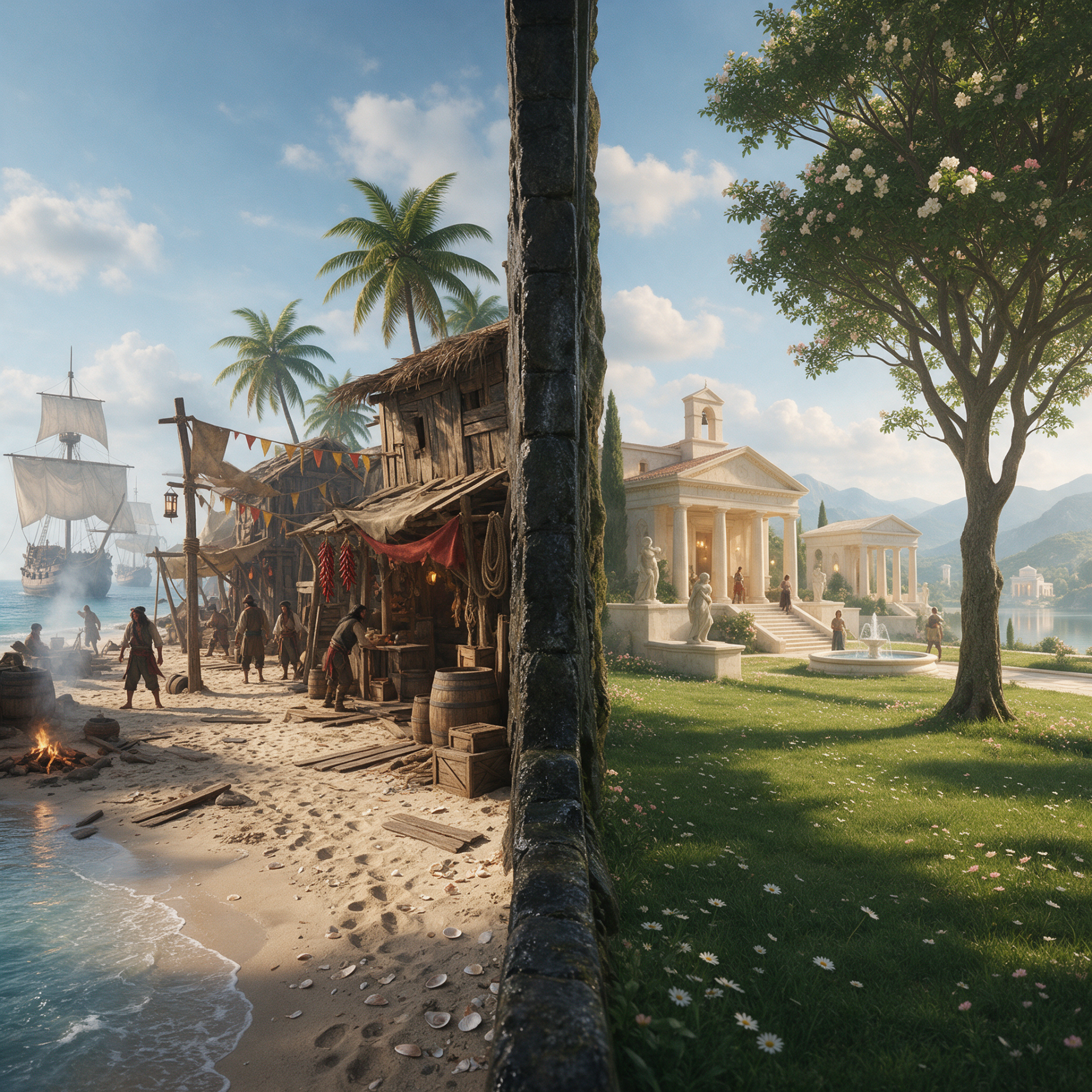
Welcome to Tortuga
This is where things start to feel a little like the Wild West.
Universities are pushing faculty to experiment with AI. Faculty are uploading material to AI systems. Students are interrogating textbooks and lecture notes. Vendors are building RAG platforms. Publishers are simultaneously developing their own AI products and tightening the terms governing how their content can be used.
Meanwhile legal teams are having to answer questions that barely existed a few years ago.
And then we zoom out one more level.
Because everything I have described so far concerns what we put into AI today.
What about what went into the models in the first place?
Many of the world's leading AI systems were developed using enormous datasets assembled from web content, books and other sources. The precise composition differs between models and is not always publicly disclosed, but copyright owners increasingly argue that substantial amounts of protected material were copied without permission or compensation.
That dispute is global and has been going on for a few years now.
The lawsuits are showing mixed results
The New York Times sued OpenAI and Microsoft in 2023, alleging that copyrighted journalism was copied to train and operate their AI systems and that some outputs compete with the original journalism. The case remains active. OpenAI and Microsoft argue that model training is transformative fair use. Remarkably, earlier this month the U.S. Department of Justice filed in support of that position, arguing that AI development is important to U.S. innovation and national security. Monorepo Sample1
The book cases are perhaps even more interesting.
In Bartz v. Anthropic, a federal judge concluded that using books to train an LLM could qualify as fair use, while treating the acquisition and permanent storage of pirated copies as a separate problem. Anthropic subsequently agreed to a $1.5 billion settlement covering hundreds of thousands of works obtained from pirate libraries. The settlement received final court approval in July 2026. Norton Rose Fulbright
And there is evidence pointing the other way. In Thomson Reuters v. Ross Intelligence, a federal court rejected a fair-use defence where a competing legal AI product had been trained using material derived from Westlaw's copyrighted editorial headnotes. Investing.com
The fight has now moved directly into educational publishing.
In 2026, Elsevier, Cengage, Hachette, Macmillan and McGraw Hill sued Meta over alleged unauthorized use of books and journal articles to train Llama. A few months later Hachette, Cengage and Elsevier brought a similar action against Google over Gemini. Those are allegations, not findings of liability, and the cases remain unresolved. But they show how central educational and scholarly publishing has become to this debate. Investing.com
Even the U.S. Copyright Office has resisted giving us a simple answer. Its major report on generative AI training concluded that some uses of copyrighted works for AI training are likely to be transformative, but that fair use depends on where the material came from, how it is used, what the system produces and what effect it has on the market. U.S. Copyright Office
Which is polished language for “we genuinely have not settled this yet”.
Is this AI's Napster moment?
There is an obvious historical analogy form the not so distant past.
Napster suddenly made almost the entire recorded music catalogue available to anyone with an internet connection. To its users it felt miraculous. Music had become abundant.
To the people who owned and created that music, something rather different was happening.
The resulting legal and commercial battle did not kill digital music. It eventually helped produce a new economic model around it.
Some people believe generative AI is approaching the same reckoning.
From that perspective, what has happened is intellectual-property appropriation at a scale humanity has never previously seen. Companies have built enormously valuable systems partly by ingesting the work of writers, journalists, academics, artists, publishers and others who were never asked and never paid.
Eventually, the argument goes, that bill comes due.
I am not convinced that it happens quite like that.
I am a techno-optimist, so perhaps I am biased toward the other side of the argument.
AI is already becoming deeply integrated into education, science, software development and the wider economy. The strategic stakes are enormous. The U.S. government's intervention in the New York Times case, explicitly linking AI development to national competitiveness and security, gives some sense of how high those stakes have become. MarketScreener
That does not mean creators should not be compensated. I firmly believe that people should be rewarded for creating valuable intellectual property.
It may mean that the eventual answer looks less like what happened to Napster and more like what happened to the digital music ecosystem as a whole, namely new licensing systems, clearer provenance, publisher partnerships, compensation mechanisms and rules governing how protected works can be used.
Or perhaps we are approaching Elysium
There is another way to look at all of this.
For most of human history, access to expertise was scarce.
Books were scarce. Teachers were scarce. University places were scarce. Expert attention was scarce.
We may now be building a world in which almost anyone can have a patient personal tutor capable of explaining almost any subject, in almost any language, at almost any level, at negligible marginal cost.
For education, that is an astonishing proposition.
A teenager in a village in rural Bulgaria can interrogate biochemistry in a way that once required access to a university professor. A nurse can have a difficult physiological mechanism explained six different ways during a night shift. An educator can turn static knowledge into interactive experiences in hours.
That looks considerably less like piracy and considerably more like abundance.
And I do not think we should lose sight of that because the underlying legal framework is messy.
The danger, of course, is pretending there is no trade-off.
Someone created the textbook or content. Someone spent decades developing the expertise behind it. Someone paid for the editorial process, illustrations, peer review and distribution.
The fact that information can now be copied, transformed and regenerated almost infinitely does not make the work required to create reliable knowledge disappear.
That is the paradox at the center of AI and education.
We want AI grounded in trusted human knowledge precisely because trusted human knowledge is valuable.
So where exactly are we?
Tortuga, where everyone is helping themselves to everyone else's intellectual property?
Or Elysium, where knowledge that was once scarce becomes abundant and personalized for almost everyone?
I am personally more of an Elysium kind of guy. We’ll have to see how it all plays out.
Author: Kiril Tasseff